Walking at the Grass-roots Level in the Spring Festival Jingxing, Hebei Province: Rural revitalization bears fruitful results and ancient counties are rejuvenated for thousands of years.
Xinhua News Agency, Shijiazhuang, January 25 th: Jingxing, Hebei Province: Rural revitalization bears great fruits, and ancient counties are rejuvenated.
Xinhua News Agency reporter Cao Guochang and Du Yifang
Fragrant sesame oil, fresh beef and mutton, dazzling candy snacks … … On the eve of the Spring Festival, the sun is shining brightly. In the village of Weihe West, Jingxing County, Hebei Province, at the eastern foot of Taihang Mountain, the gathering is full of people and excitement. Nearby villagers come to buy new year’s goods in groups of three or five on foot or by bike.
In the past, no one thought that a bumpy mountain path turned into a six-meter-wide market avenue. As a beautiful epitome of the road to rural revitalization, it undoubtedly witnessed the butterfly change in Jingxing, a thousand-year-old county.
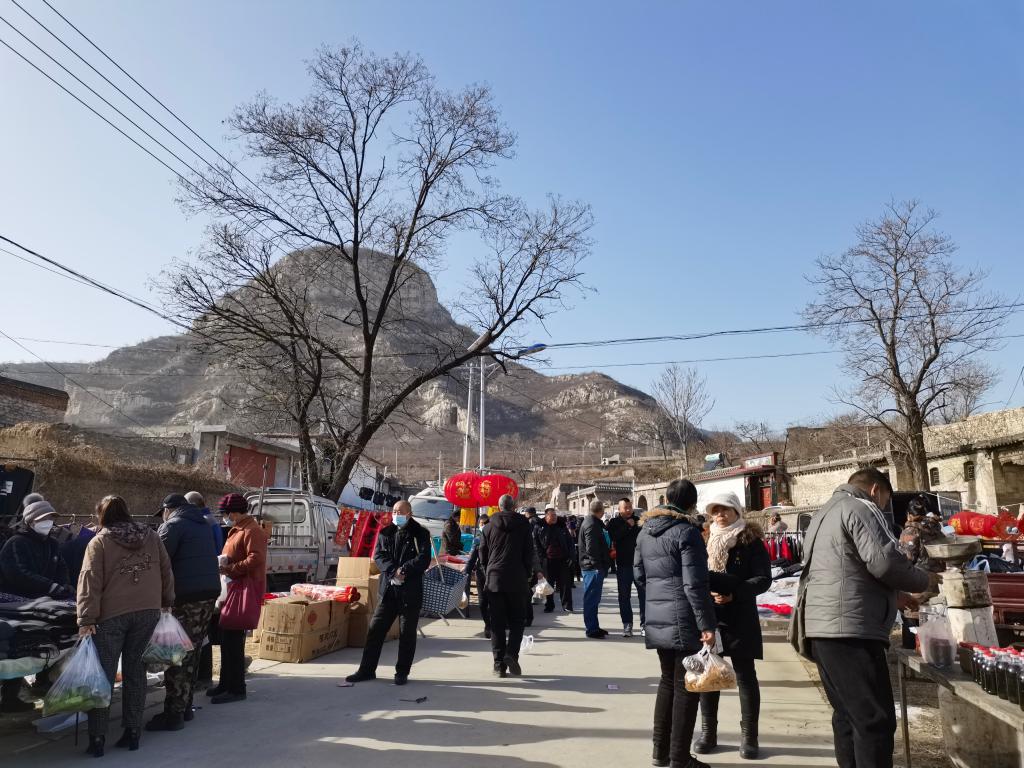
The picture shows that on the eve of the Spring Festival, in Weihe West Village, Jingxing County, Hebei Province, at the eastern foot of Taihang Mountain, the gathering was full of people and excitement. (Photo by Xinhua News Agency reporter Du Yifang)
Jingxing, located at the junction of Shanxi and Hebei, was a county in Qin Dynasty, with a history of more than 2,000 years. In recent years, Jingxing has comprehensively promoted the rural revitalization construction, and developed the Mianman River Wetland Tourism Economic Belt with a total length of 26.8 kilometers and a total area of 122.6 square kilometers to benefit from ecology and moisten people’s hearts with mountains and rivers, and guided the emerging industries such as creative agriculture and cultural tourism to gather along the river and develop.
"It turns out that this road is curved and steep. There are adobe houses on both sides. At most, a circle of blue bricks is built at the door frame. There are many pigsty and toilets along the road, and garbage is everywhere." Yan Heping, a 56-year-old villager from Weihe West Village, pointed to the distance and said that earth-shaking changes have taken place in the village. Three bungalows have been built in his home, and there is no need to live in the days of heavy rain outside and light rain inside.
Weihe River West Village is located on the west bank of Mianman River. It used to be a veritable poor ravine with blocked traffic. In the 1970s, people relied on livestock to pull water to eat, and later a calcium carbonate factory was built, which destroyed the ecological environment.
Nowadays, relying on the construction of Mianman River Wetland Tourism Economic Belt, Weihe Village highlights the three characteristics of fish, lotus and spring, and builds a spring group health resort. The sturgeon industrial park with an investment of tens of millions of yuan is popular with tourists, and the colored peppers and cantaloupes produced by the characteristic fruit and vegetable planting bases are listed one after another, integrating more than 50 old farm houses to develop the hotel industry, which has become a punching place in online celebrity.
"Industry is the cornerstone of rural revitalization. Last year, the village collective income reached more than 400,000 yuan." Ma Zhiqiang, secretary of the Party branch of Weihe River West Village, said, in the next step, we plan to develop projects such as flower sea sightseeing tour, fishing and picking tour and special food tour, so that more villagers can enjoy the rural tourism bonus.
Luoyang Village, Jingxing County, located at the foot of Ma Tou Hongshan Mountain, is surrounded by mountains and waters. In the past, this has just become the biggest obstacle to the development of the village. Because it is surrounded by mountains on three sides and Mianman River in the east, there was only one flooding bridge leading to the outside world in the village. Once in flood season, it was ferried back and forth by two boats, and more than 2,000 acres of apple trees in the village often sold at a low price of two or three cents a catty.
As an important node village in Mianman River Wetland Tourism Economic Belt, a new river-crossing bridge built last year completely opened the rural revitalization road in Luoyang Village. Luoyang Village, located at 38 degrees north latitude, has a history of apple planting for more than 50 years. Now, a "Ping ‘an Town" led by the apple industry and deeply integrated with agriculture, culture and tourism has been built.
"I didn’t dare to think about it before. The poor mountain valley can actually eat tourist meals. I also plan to build 5 homestays and 1 restaurant." The canteen of Yu Yanxiu, a villager in Luoyang village, is 300 meters away from the river beach. It has been open for nearly 30 years, and it has been crowded from the past to the present holidays.
This year’s Luoyang Village New Year’s Fair opened more than 200 booths, and there was an endless stream of tourists buying new year’s goods. "When the apples were ripe last year, there were at least 8,000 tourists coming to our village to pick them." Yang Junwei, secretary of the Party branch of Luoyang Village, said that when I was a child, I always felt that my hometown was into the badlands, and now I finally understand the truth of "Lucid waters and lush mountains are invaluable assets".
Ancient villages are unique resources in Jingxing. As the first batch of ancient counties in China, there are 73 traditional villages in Jingxing, including 44 traditional villages in China and 5 famous historical and cultural villages in China, ranking first in Hebei Province. In recent years, Jingxing County, while building the Mianman River Wetland Tourism Economic Belt, has built the Taihang Tianlu Tourism Economic Belt, which is composed of the east and west lines and has a total length of about 60 kilometers, connecting the traditional villages hidden in the deep mountains into a chain.
Nanhengkou Village, which has the reputation of "Ceramic Water Town", is located at the intersection of Mianman River Wetland Tourism Economic Belt and Taihang Tianlu Tourism Economic Belt. According to the Tang Xingshan Temple Monument, Nanhengkou Village was built in the Western Han Dynasty. Since Sui and Tang Dynasties, the ceramic manufacturing industry in the village has been developing and prospering, and it has become one of the three major areas of Jingxing Kiln, one of the four famous kilns in Hebei.
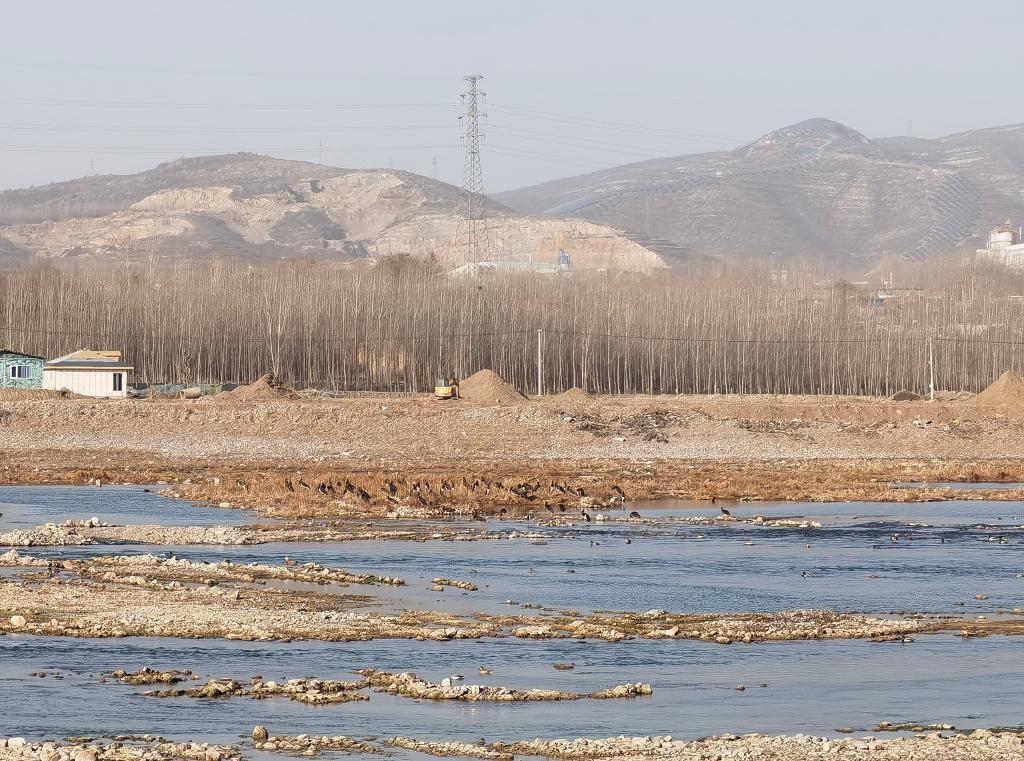
The picture shows the birds in Mianman River wetland in Jingxing County in winter. (Photo by Xinhua News Agency reporter Du Yifang)
In recent years, Nanhengkou Village, relying on the resource advantages of Jingxing ancient porcelain kiln and based on the principle of "protect first, then develop, repair the old as the old, and embody the characteristics", has carried out retro-style renovation on the ancient buildings of Ming and Qing dynasties in the village, sorted out a number of small courtyards with amorous feelings integrating eating, living, playing, traveling and purchasing, and built an ancient village with ceramic culture and a waterfront landscape belt.
In the past, the poor mountain valley turned into a "good scenery" for cultural tourism, and a "new picture" of rural revitalization was slowly spread in Jingxing, a thousand-year-old county. Many local villagers, seeing tourists weaving, no longer leave their homes and go out to work, have chosen to open farmhouses in the village, which can not only earn money but also take care of their families.